Product design subscription vs hiring a designer in the UAE
Compare a product design subscription with an in-house designer in the UAE. Understand costs, capacity, ownership and which model fits your team.

A product design subscription can suit a UAE team with a clear backlog and changing demand. An in-house designer can be a better fit when you need someone embedded in product decisions every day. The right choice depends on the work, the context it requires and how consistently you need design capacity.
Consider a SaaS team in Dubai preparing a new onboarding flow. If the product owner can set priorities and provide regular feedback, an external design team may fit well. If the designer also needs to lead customer research, negotiate priorities across departments and shape the roadmap daily, an internal role may make more sense.
Use the comparison below to decide which model fits your next stage.
Compare the working model before the price
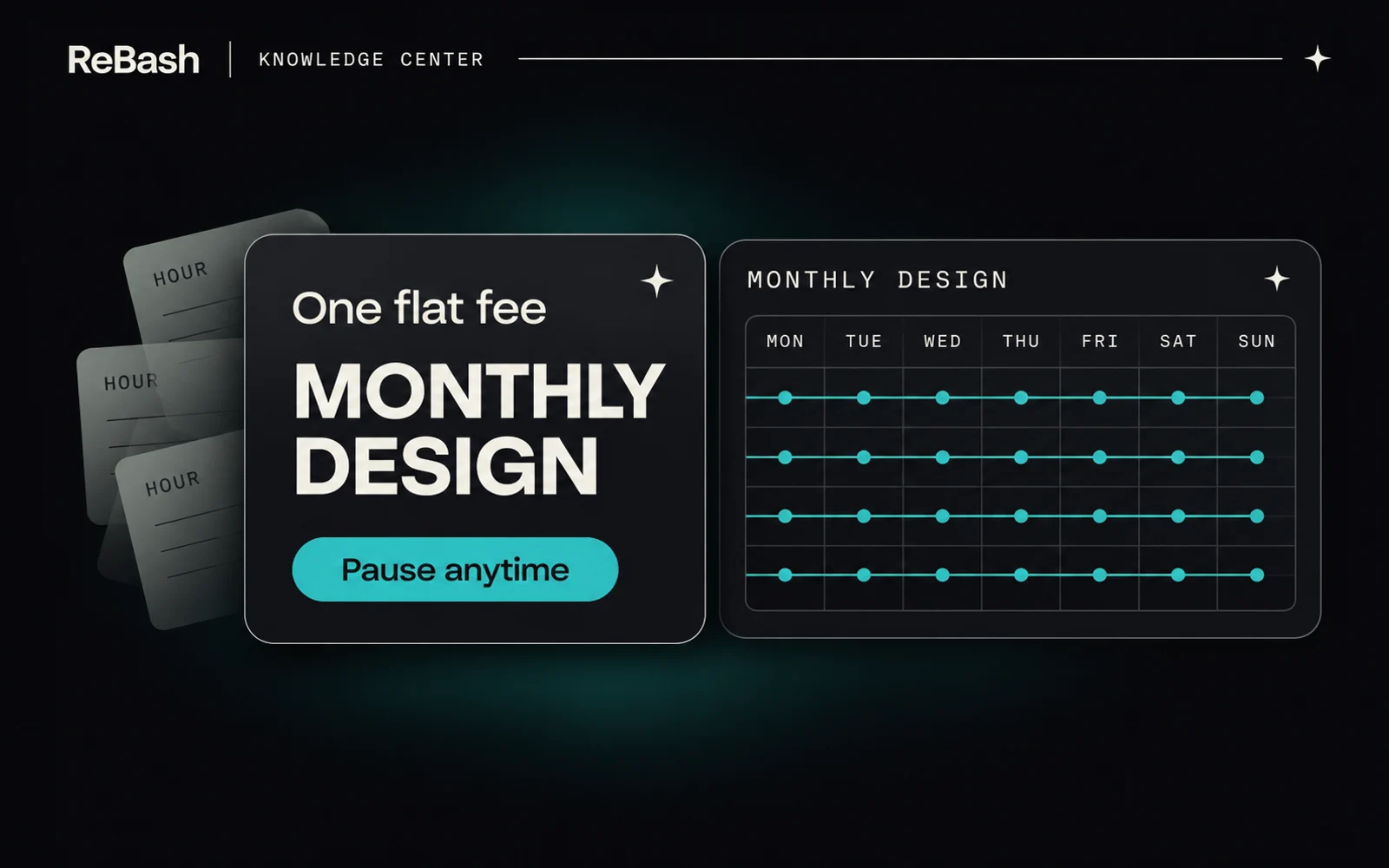
A product design subscription is a recurring service: you submit and prioritize design work, and the provider delivers within an agreed scope and capacity. A monthly fee does not automatically mean a designer is available exclusively to you or that every request starts immediately.
Hiring creates an internal role. You decide its responsibilities, reporting line and collaboration with product and engineering. You also need to provide direction, onboarding and a realistic workload.
| Decision | Product design subscription | In-house designer |
|---|---|---|
| Workload | Useful when work can be prioritized into a queue | Useful when there is sustained work for a dedicated role |
| Product context | Requires clear briefs, access and regular feedback | Supports continuous participation in internal decisions |
| Capacity | Defined by the service agreement and active-request limits | Defined by the role, skills and available working time |
| Flexibility | Depends on the provider’s pause, cancellation and scope terms | Changes require internal staffing and workload planning |
| Management | Someone on your team still owns priorities and approvals | Someone still owns direction, feedback and development |
Neither option removes the need for product leadership. A designer can help clarify a problem, but someone must decide what matters to the business and who approves the work.
Compare costs over the same period
Use a three-month planning window and compare the work you actually expect to need. Avoid comparing a subscription’s monthly fee with salary alone, or assuming one subscription replaces every responsibility of an internal employee.
For an internal role, budget using actual candidate expectations and your company’s applicable costs: recruitment, onboarding, equipment, software, benefits and management time. Confirm employment-related requirements with your HR team rather than relying on a generic salary comparison.
For a subscription, check the monthly fee, active-request capacity, revisions, excluded services and any separate platform or software charges. Ask which currency will appear on the invoice and how any applicable taxes are shown. This is particularly useful when your UAE finance team budgets in AED but a provider advertises prices in dollars.
As checked on 5 November 2026, ReBash’s pricing page lists MVP Design at $2,800 per month with one active design request, and Product Growth Design at $4,500 per month with two active requests. Three paid months therefore total $8,400 or $13,500 in advertised subscription fees. Those figures are not an all-inclusive project quote or a claim of savings versus hiring; confirm scope, billing currency and any additional charges before committing.
Understand capacity, turnaround and handoff
“Unlimited requests” usually needs a second question: how many can be worked on at once? A long queue does not create unlimited delivery capacity. For example, The Treasury’s subscription page describes active-task limits that vary by plan. Compare the actual terms of each offer rather than treating subscriptions as interchangeable.
Break your backlog into concrete deliverables: an onboarding flow, a dashboard state, a prototype or a component set. Ask the designer or provider to estimate these examples before you choose a model. A first draft, an approved design and a launched product are different milestones.
Clarify the handoff as well. Does the engagement cover design files, component documentation, implementation or all three? Product design for an app is distinct from writing its backend or native application code. Website implementation in Webflow or Framer also needs an agreed page count, functionality and delivery schedule.
For either model, agree on source-file access, ownership terms, third-party asset licenses and what happens when the engagement ends. Review relevant project examples and ask what the team actually delivered.
Ask the questions that matter for a UAE team
Location wording on a website is less useful than clear answers about how the work will happen. Before choosing a partner or candidate, ask:
- Which working hours overlap with our UAE team, and when can we review work together?
- If we need Arabic, who supplies and approves the copy, and who handles right-to-left layouts and testing?
- Who can speak with customers or review research, and what access will they need?
- Which currency, payment schedule and tax treatment apply to the agreement?
- Who coordinates with engineering, and who checks the implemented result?
For example, an English-only prototype and a bilingual production website have different review requirements. Make those requirements explicit before comparing prices. Do not assume that every UAE-based provider offers Arabic copywriting or bilingual implementation.
Choose for the work ahead
A subscription is worth considering when you have a prioritized backlog, a clear decision-maker and work that can move through an agreed queue. An internal hire is worth considering when continuous product context, daily cross-team decisions and sustained ownership are central to the role.
You can also combine the two: an internal designer owns product context while an external team supports a defined launch or backlog. The arrangement works best when responsibilities and approvals are explicit.
Write down your next five design requests, who will approve them and when they are needed. Use that list to compare realistic capacity. If a monthly partnership looks suitable, review ReBash’s plans or book a consultation to discuss the scope.
See our monthly product design plans for UAE software teams and agencies, or book a consultation.